Far From Home, Finally Seeing It: What Americans Living Abroad Learned About Being American
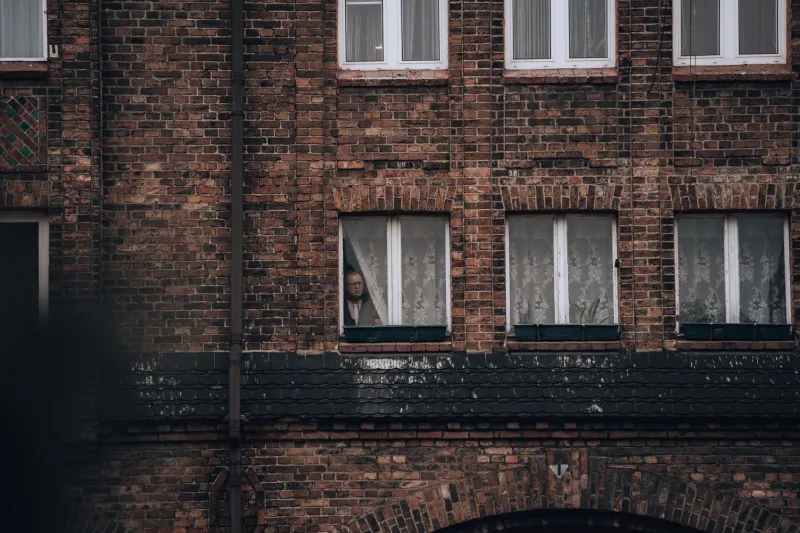
There's a specific kind of clarity that only comes from standing far enough away from something to see its actual shape. For a lot of Americans living overseas, that something is the United States itself.
We spoke with a handful of Americans who ended up in places you might not expect — a tiny village outside Kyoto, a neighborhood in Mexico City that doesn't show up in travel guides, a mid-sized Polish city most Americans couldn't find on a map. What they shared wasn't a clean story of enlightenment or disillusionment. It was messier and more honest than that. It was, in a lot of ways, a story about what happens when the story you've been told about yourself stops being the only one available.
"I Thought I Knew What Normal Was"
Marcos Rivera, 34, left Chicago for Mexico City six years ago for what he thought would be a two-year work stint. He's still there.
"I grew up Mexican-American, so I figured I'd just... slot in," he said, laughing a little at his past self. "I had family there. I spoke Spanish. I thought I understood the culture. And then I actually lived there, and I realized how deeply American I was in ways I'd never examined."
Small things hit first. The pace of daily life. The relationship people had with their neighborhoods, with their neighbors. The way time worked around meals, around family, around rest. "In Chicago, I was always optimizing. Always trying to be productive. I got to Mexico City and people looked at me like I was slightly unwell."
But it was the political stuff that really cracked things open. "I came with all my American political categories — left, right, progressive, conservative. And they just didn't translate cleanly. I had to start thinking about issues from the ground up instead of reaching for the label I already had."
He's careful not to romanticize it. Mexico City has deep inequality, serious safety concerns, and its own complicated politics. "I'm not saying it's better. I'm saying I stopped assuming American = default. That's a big shift."
The View From a Rice Field
Katherine Bloom, 29, teaches English in a small town in Hyogo Prefecture, Japan — the kind of place where she is, reliably, the only foreigner anyone has seen in a while.
"The isolation hit me first," she said. "Not in a bad way, exactly. But there's something about being visibly, permanently 'other' that teaches you things."
What it taught her, mostly, was how invisible that otherness had been back home. "I'm white, I'm from Ohio, I'm very American. I never had to think about whether I belonged somewhere. And then suddenly I did, every single day. That's uncomfortable. But it's also incredibly clarifying."
Her politics shifted too, though not in the direction people might assume. "I came in pretty politically confident. I had opinions. And then I started watching how Japan handled things — public health, infrastructure, community responsibility — and I stopped being so sure that the American way of doing things was the obvious right answer."
She's also honest about what that realization cost her. "I came home for Christmas two years in and had a genuinely hard time at family dinners. Not because my family is bad — they're great — but because I couldn't unsee things I'd seen. I had to figure out how to hold that without being insufferable about it."
What You Miss Is Never What You Expect
Ask an American expat what they miss about home and the answers are almost never what you'd think. Not the big stuff. Not the national parks or the Fourth of July or even the people, at least not immediately.
It's the small, specific, slightly embarrassing things. Marcos misses Chicago deep-dish pizza and the particular way strangers talk to each other in Midwestern cities. Katherine misses the size of American grocery stores — "I know that's terrible, but I miss just having options" — and the ease of small talk with strangers.
Dan Kowalski, 41, who moved to Kraków, Poland eight years ago after marrying a Polish woman he met in New York, misses American customer service. "Which I know sounds insane, because American customer service is famously fake. But there's something about the energy of it — the 'have a great day!' — that I didn't realize I'd internalized as normal."
What's interesting is what that list of small missing things reveals. Strip away the political identity and the cultural assumptions and what you're left with is texture — the specific sensory and social texture of the place you grew up. That's what home actually is, most of the time.
Seeing the Flag Differently
All three of the people we spoke to described a complicated new relationship with American identity — not rejection, but a kind of renegotiation.
"I'm more American than I've ever been, in a weird way," said Marcos. "Because now it's a choice. I'm here. I could go back. I stay because I want to. That feels more honest than just being American because that's what I was handed."
Katherine put it differently: "I used to think being American was just a neutral fact about me. Now I know it's a lens. It shapes how I see everything. That's not bad — it's just true. And knowing it's a lens means I can sometimes take it off."
Dan, who has lived in Poland through some genuinely turbulent political years in both countries, is the most measured. "I watch American politics from here and it looks different. Not better or worse — just different. Like watching a movie you love on a small screen instead of a big one. You see more of the frame."
The Stories That Cross Borders
At Sulasok, we believe the most important stories are the ones that move — the ones that carry meaning across the lines we draw between us. These expat experiences aren't really about leaving America. They're about understanding it from a place you can only get to by leaving.
None of the people we talked to claimed to have figured it out. They're all still working through what home means, what American means, what they believe and why. But they're doing it with the kind of honest uncertainty that only comes from having genuinely crossed a border — not just geographically, but in every way that matters.
That crossing, uncomfortable and clarifying all at once, might be the most American thing of all.