The Thing in the Suitcase That Was Never Just a Thing
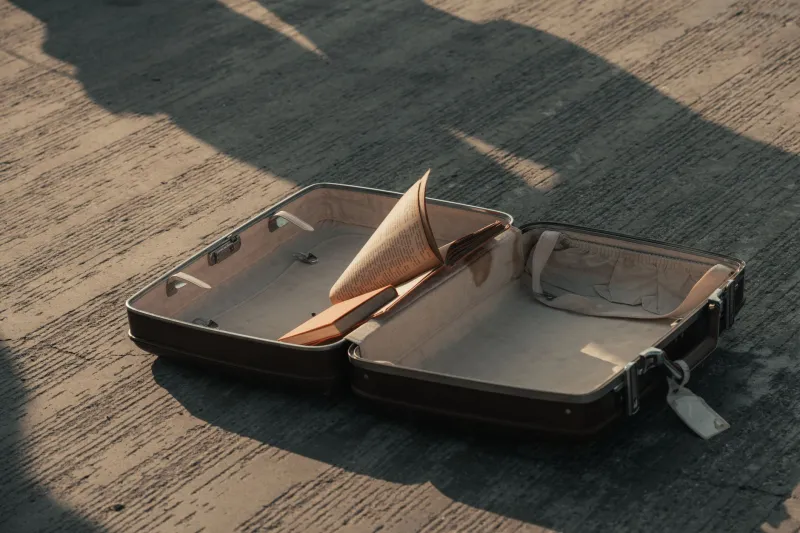
When Yusuf Abdi came to the United States from Somalia in 2003, he brought almost nothing. The circumstances didn't allow for much. But tucked into the one bag he carried was a small brass incense burner — a dabqaad — that had sat on his grandmother's shelf for as long as he could remember. It wasn't valuable in any conventional sense. It was dented. It had a crack along the base that his grandmother had repaired with what appeared to be ordinary household adhesive.
Yusuf is 41 now and lives in Columbus, Ohio. The dabqaad sits on his own shelf. He burns incense in it every Friday.
"It's not about the object," he said. "It's about what happens in the room when I use it. The smell. The ritual. It pulls something forward."
Why We Carry What We Carry
Ask people what they bring back from trips to their home countries — or what they've kept from their heritage, sometimes across multiple generations — and the answers are rarely what you'd expect. Not jewelry. Not money. Not the obviously precious things.
A woman in Houston keeps a wooden spoon that belonged to her Vietnamese grandmother, the handle worn smooth in exactly the shape of a hand that no longer exists. A man in New Jersey has a cassette tape of his father singing at a wedding in Nigeria in 1987. He doesn't own a cassette player. He's never heard the tape. He's not sure he wants to.
A college student in Portland carries a small plastic bag of soil her mother gathered from their village in the Philippines before emigrating. It's been in a drawer for eleven years. Nobody talks about it. Everyone knows it's there.
These objects don't make logical sense. That's the first thing to understand about them. They're not chosen for their utility or their beauty or their resale value. They're chosen because they hold something that can't be held any other way.
The Anchor and the Argument
Cultural psychologists have a term for this: object attachment — the way humans project meaning, memory, and identity onto physical things. But what's particular about the objects that cross borders is that they're not just personal. They're political, in the quietest possible way.
To carry a thing home is to make a claim. To say: this is worth the weight. This is worth the customs declaration. This is worth the raised eyebrow from the TSA agent who wants to know why you have a bag of dirt.
Grace Amoah, 35, an artist based in Atlanta originally from Ghana, has made a whole body of work around the objects her family brought when they immigrated in the 1990s. Her mother carried kente cloth. Not a decorative piece — the actual cloth used at family ceremonies, which should by tradition have stayed with the family's community back home.
"My mother made a choice to take it," Grace said. "She was criticized for it. But she knew that if she didn't bring it, it would be gone. The community was breaking apart. She was the keeper."
The cloth is now in Grace's studio. She photographs it. She incorporates it into installations. She refuses to let it become a relic.
"An object dies when it stops being used," she said. "I'm keeping it alive."
The Things That Grow
Some of the most quietly radical objects people carry are alive. Literally.
Plant cuttings — slipped into luggage, smuggled past agricultural inspection, kept alive in small pots on apartment windowsills in cities far from where they originated — have their own underground economy in immigrant communities. A cutting from a mango tree. A slip of basil that tastes different from anything you can buy in an American grocery store. A flower that blooms on a specific calendar that has nothing to do with the weather outside.
Celia Romero, 67, has a lemon tree on her balcony in Los Angeles that is, technically, the great-grandchild of a tree from her family's property in Oaxaca. Her mother brought a cutting in the 1970s. Celia rooted a cutting from that plant when she moved out on her own. Her daughter now has a cutting from Celia's tree in her apartment in San Francisco.
"We joke that the tree is the most traveled member of our family," Celia said. "But it's not really a joke. That tree has been in this country longer than most of my grandchildren."
The lemons it produces are smaller than the ones at the grocery store. They're more sour. They taste, Celia says, like a specific afternoon in a specific kitchen that no longer exists.
What We're Actually Keeping
It would be easy to read all of this as nostalgia — as people clinging to the past because the present is hard. And sometimes that's part of it. Migration is loss, and objects can be a way of grieving.
But the people we spoke to pushed back on that framing. For most of them, these objects aren't about going backward. They're about carrying something forward — making sure that a particular way of seeing the world, a particular set of values, a particular sound or smell or texture, doesn't get swallowed by the overwhelming standardization of American life.
"I don't burn incense because I want to be back in Somalia," Yusuf said carefully. "I burn incense because I want my children to know that Friday has a smell. That there's a way to mark time that isn't just a calendar notification."
That's what these objects are really doing. They're not souvenirs. They're not antiques. They're arguments — small, stubborn, ongoing arguments — that some things are too important to leave behind.
Even when the suitcase is full. Even when the customs officer is suspicious. Even when the cassette player is long gone and the tape will never be played.
Some things you carry anyway. Because the carrying is the point.