Beautiful Mistakes: The Best Things That Ever Happened Because Nobody Understood Each Other
Most of us are taught that misunderstandings are problems to be solved. Clarify. Correct. Get back on the same page as quickly as possible. But spend any time at the intersection of cultures — and in America, that intersection is basically everywhere — and you start to notice something. Some of the best things that exist came into being precisely because someone got it wrong.
Not maliciously wrong. Not carelessly wrong. Just... wrong in the way that happens when two people from different worlds try to communicate and the signal doesn't quite make it through intact. What comes out the other side is sometimes better than what either person originally intended.
Here are some of our favorite examples — collected from communities, contributors, and corners of the internet where the accidental and the beautiful tend to overlap.
The Restaurant That Named Its Best Dish After a Mistake
A Vietnamese restaurant owner in Houston tells the story of a dish that became her most-requested menu item entirely because of a translation error. When she first opened, she described a particular braised pork preparation to an English-speaking food writer using the closest phrase she could find: "melting meat." The writer, charmed by the description, printed it exactly as he heard it. Customers started coming in and asking for the "melting meat." She put it on the menu with that name. It's been there for eleven years.
"The real name is much more specific," she says, laughing. "It describes the technique, the region, the occasion it's usually made for. 'Melting meat' doesn't describe any of that. But it describes how it feels to eat it, which maybe is the more important thing."
The accidental English name, she says, actually opened a door. It gave people without Vietnamese language or cultural context a way to connect with the dish on their own terms. Something was lost in translation — and something else, something unexpected, was found.
When a Dance Move Crossed a Border It Wasn't Supposed to Cross
In the early 2000s, a specific hand gesture that was part of a traditional celebratory dance from a West African community in the DC metro area got picked up by a group of teenagers from a completely different background who saw it at a community event. They had no idea what it meant in context. They thought it looked cool. They started doing it at parties.
Eventually, the gesture made its way back to members of the original community — now transformed, remixed, attached to a completely different musical context. Reactions were mixed, as they often are when cultural elements travel without their original meaning. But something interesting happened at the edge of that tension: a few young people from both communities started talking about it. Those conversations turned into a collaboration. That collaboration turned into a dance workshop series that ran for three years and brought together kids from backgrounds that had very little reason to interact.
"The misunderstanding was the opening," says one of the original organizers of the workshops. "Without it, we never would have had a reason to sit down together."
The Spelling Error That Became a Brand
This one comes from a small business owner in Chicago's Pilsen neighborhood, a Mexican American woman named Adriana who runs a bakery that's become a neighborhood institution. When she first had a sign made for her shop, the sign painter — working from a handwritten note — misspelled the name she'd chosen. She didn't have the budget to redo the sign. She kept it.
Customers started asking about the name. She started telling the story. The story became part of the brand. The "wrong" name now has its own meaning, its own history, its own loyal customer base who knows exactly what it refers to.
"My grandmother thought it was hilarious," Adriana says. "She said it was more American that way. I didn't know if that was a compliment or not. I decided to take it as one."
The Song Nobody Understood That Everyone Loved
In the mid-2010s, a Korean American indie musician in Los Angeles released an EP that included a track with lyrics partially in Korean and partially in English — but the Korean sections were intentionally written in a regional dialect that even most Korean American listeners wouldn't recognize. The artist expected the song to find a small, specific audience.
Instead, it went modestly viral among listeners who had no Korean language background at all. They loved the sound of the words without understanding them. Some of them wrote their own interpretations of the lyrics in the comments — elaborate, earnest, completely invented narratives about what the song was about.
"Some of them were so beautiful," the artist said in an interview. "More beautiful than what I actually wrote. I started thinking about what it means when a piece of art escapes your intentions and becomes something else in someone else's hands. I don't think that's a bad thing. I think that might be the whole point."
The song ended up informing the direction of their next album, which leaned directly into the idea of deliberate ambiguity — making music that invited multiple interpretations across cultural lines.
The Handshake That Turned Into a Greeting
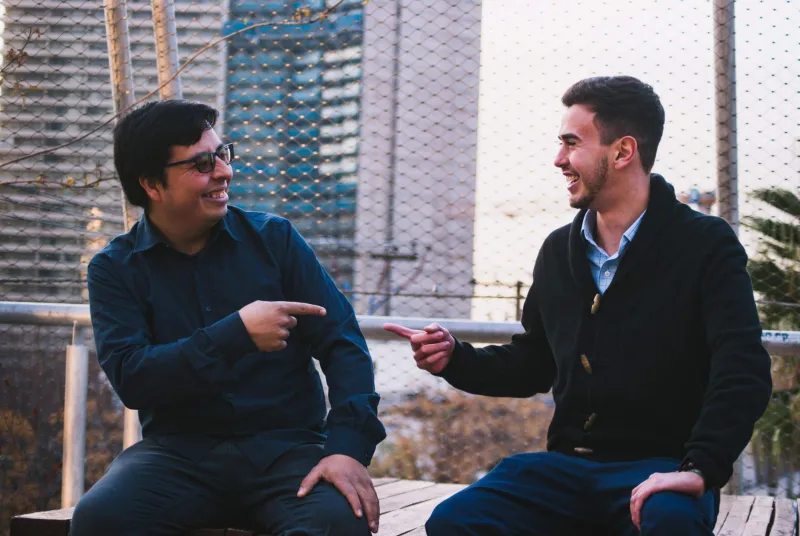
A community organizer in Minneapolis who works with both East African and Latino immigrant communities describes a moment early in her career when a cultural greeting went sideways in the best possible way. A Somali elder and a Mexican American community leader met for the first time at a joint event. The Somali elder extended his hand; the Mexican American leader, accustomed to a warmer physical greeting, went in for a half-hug at the same time. They collided awkwardly, laughed, and then — almost instinctively — invented a new handshake on the spot that incorporated elements of both gestures.
"They did it again every single time they saw each other after that," she says. "It became their thing. And watching them do it, this completely made-up greeting that belonged to nobody's culture and both of their cultures at the same time — that's when I understood something about what cross-cultural community actually looks like. It's not about perfectly understanding each other. It's about what you build in the space where the understanding breaks down."
The Takeaway
None of these stories are about celebrating confusion or romanticizing the genuine difficulties of cross-cultural communication. Misunderstandings can cause real harm, and the work of actually understanding each other matters.
But alongside that work, there's something worth paying attention to in the accidents — in the moments where the gap between intention and reception produces something neither side expected. Those moments are data too. They tell us something about where cultures are porous, where they're hungry for contact, where the human impulse to connect is stronger than the barriers in the way.
Sometimes the most direct path between two people runs straight through the mistake.