Street-Level School: The Shadow Curriculum Immigrant Communities Built When No One Was Looking
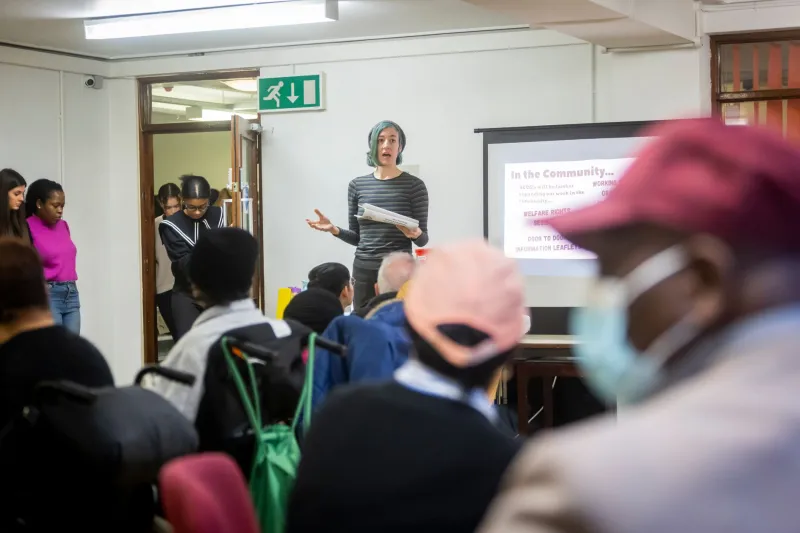
There's a scene that plays out in cities all over the United States, so ordinary that most people walk right past it. A newer arrival is sitting with someone who got here a few years earlier, and the older hand is explaining something — maybe how to dispute a charge on a utility bill, maybe what to actually say (versus what not to say) when a landlord calls, maybe which DMV location has the shortest wait on a Tuesday. No textbook covers this. No orientation packet comes close. But the knowledge moves anyway, person to person, community to community, as reliably as anything you'd find in a classroom.
This is the shadow curriculum — and for millions of immigrant families across America, it's the most practical education they've ever received.
What Schools Don't Teach and Communities Do
Formal education in the US does a reasonable job of covering civics on paper. You'll learn the three branches of government. You might even learn how a bill becomes a law. What you almost certainly won't learn is how to navigate a public housing waitlist, how to talk to a debt collector without accidentally restarting the statute of limitations, or how to read the fine print on a car dealership contract in a way that doesn't leave you upside down on a loan.
For immigrant communities, this gap isn't abstract — it's the difference between stability and crisis. And so, organically, communities filled it themselves.
In the Somali diaspora communities of Minneapolis and Columbus, informal networks have developed deep institutional knowledge around refugee resettlement bureaucracy that rivals anything a paid consultant could offer. Longtime residents mentor newer arrivals through the labyrinthine process of adjusting immigration status, explaining not just the forms but the feel of the process — which offices tend to be more flexible, which documentation to bring even when it's not technically required, how to follow up without accidentally flagging your case for extra scrutiny.
"There's a whole vocabulary to it," says one community member in Columbus who asked to go by her first name, Hodan. "Things you only learn by watching someone else do it first. I spent my first two years here making mistakes that nobody warned me about. Now I try to be the person who does the warning."
The Knowledge Has Always Moved — Now It's Being Documented
What's changing in the current moment is that younger generations — the 1.5ers and second-gen kids who grew up straddling two worlds — are doing something new with this inherited knowledge. They're writing it down. They're making videos. They're building it into apps, spreadsheets, and community Discord servers.
In the Filipino American community in the Bay Area, a loose collective of twenty-somethings has been compiling what they call a "survival wiki" — a shared document that covers everything from how to negotiate a raise without burning a bridge (a culturally fraught topic in many Filipino households, where directness about money can feel taboo) to how to set up a simple LLC for a small family business. The document started as a Google Doc shared between friends. It now has hundreds of contributors.
"Our parents figured all of this out the hard way," says one of the project's early contributors, a 26-year-old named Marco who grew up in Daly City. "They learned by getting burned. We're trying to make it so the next generation doesn't have to get burned the same way."
Similar projects are popping up in Haitian American communities in South Florida, in Korean American networks in Los Angeles, in Indian American WhatsApp groups that function less like family chat threads and more like collaborative reference libraries. The content is wildly varied — tax strategies for small business owners, scripts for difficult conversations with American employers, explanations of how credit scores actually work — but the impulse behind all of it is the same. Someone learned something the hard way, and they want to make sure the knowledge doesn't die with their experience.
Unspoken Social Codes Are Part of the Curriculum Too
The shadow curriculum isn't only practical. A huge portion of what gets passed through these networks is social and cultural — the unwritten rules of how American life actually operates beneath its official surface.
What does it mean when a coworker says "we should grab lunch sometime" and doesn't follow up? (Probably nothing — it's a social pleasantry, not a real invitation.) How do you read a performance review that's technically positive but contains phrases that are actually warnings? When is it okay to push back on a doctor's recommendation, and how do you do it without being dismissed?
These are the kinds of questions that don't have obvious answers if you weren't raised inside a particular cultural context. And for immigrant families navigating American professional and social life, getting them wrong can have real consequences.
"There's this whole layer of American communication that's indirect in ways that aren't obvious," says Priya, a second-generation Indian American in her early thirties who grew up in New Jersey and now runs a mentorship program for young South Asian professionals in New York. "People say one thing and mean another, and if you didn't grow up here, you can miss it completely. Part of what I do is just... translate that. Not language translation. Cultural translation."
Her mentorship program — which she started informally before it grew into something with a name and a waiting list — covers topics like networking etiquette, how to advocate for yourself in performance reviews, and how to manage the specific kind of imposter syndrome that comes from being the first person in your family to work in a particular industry. None of it is in any official curriculum anywhere. All of it is essential.
A Parallel System Running Alongside the Official One
What's remarkable about the shadow curriculum isn't just that it exists — it's how sophisticated it's become. These aren't just informal chats. They're structured knowledge systems with their own logic, their own pedagogies, their own ways of credentialing expertise. The person who's been here longest isn't automatically the authority; it's the person who's navigated a particular situation most successfully, or who has the clearest way of explaining what they know.
In some ways, it's a more honest educational model than a lot of what happens in formal institutions. The feedback loop is immediate. If the advice doesn't work, you hear about it. The curriculum updates constantly.
And unlike a lot of official systems, it's built entirely on trust — the trust that comes from shared experience, shared stakes, and the understanding that everyone in the network is trying to help each other survive and thrive in a country that doesn't always make either of those things easy.
The shadow curriculum has always been there. The difference now is that more people are paying attention to it — and the people who built it are finally getting credit for what they made.