The Country That Never Clocks Out: A Night Shift Spent With the People Who Keep America Running
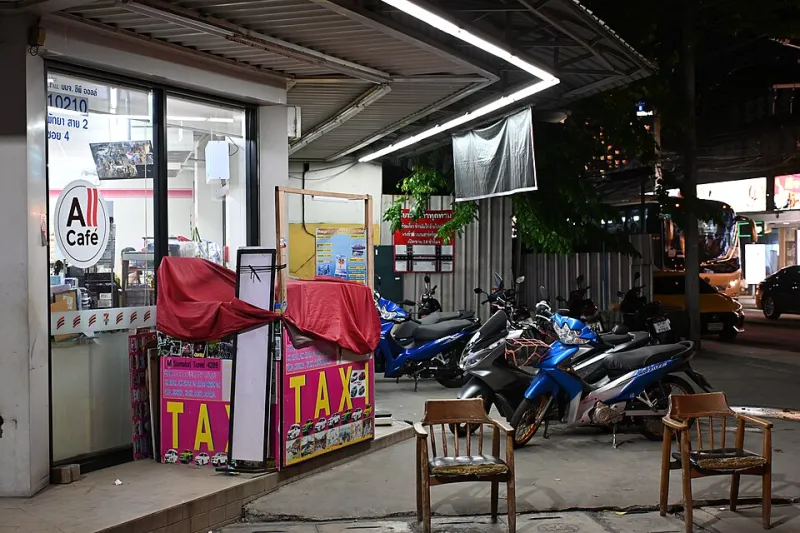
Photo: PattayaPatrol, CC BY-SA 4.0, via Wikimedia Commons
There's a version of America that only exists after midnight. Most of us never see it. We go to bed in one country and wake up in another, and in between, a whole other nation carries on — dimly lit, quietly staffed, and more diverse than anything you'll find in daylight.
I spent time moving through that world, and what struck me first wasn't the exhaustion, though there's plenty of it. It was the company. The overnight economy might be the most quietly multicultural space in America, a place where paths cross that would never intersect under the sun.
The Bodega at 2:47 A.M.
The corner store in any major American city is a small United Nations with a coffee station. At 2:47 a.m., the man behind the counter has been there since the afternoon shift and won't leave until the morning guy arrives. Behind him, shelves were stocked by someone who came from the Dominican Republic, or Yemen, or Senegal — bodega ownership in New York is so heavily Yemeni and Dominican that whole supply chains run through those communities.
The customers at this hour are a mix of insomniacs, coming-home bartenders, nurses ending their shift, and travelers with suitcases. Nobody hurries. The fluorescent hum does the talking. A man buys a loose cigarette and a lottery ticket; the clerk asks about his mother. This is small talk the way it exists at 3 a.m. — slower, more honest, stripped of performance.
Terminal B, Where the Cleaners Outlast the Crowds
Airports never close; they just change shifts. The day belongs to passengers. The night belongs to the people who reset the whole machine.
The janitorial crews of America's airports are overwhelmingly immigrant — from West Africa, Central America, the Philippines, Eastern Europe — and they move through terminals at night the way a stage crew moves through an empty theater. Floors get buffed to a shine no traveler will ever notice. They know things about the airport no passenger does: which gates are coldest, which bathroom the flight crews prefer, how long the quiet really lasts before the first 5 a.m. departure shatters it.
Two cleaners from different continents, sharing a bench and split coffee at 3 a.m., might have more genuine conversation across cultures in one break than most of us have in a month. The night shift flattens things. Titles don't matter at 3 a.m. Kindness does.
Between Fares, a Nursing Textbook
Then there's the ride-share driver, that most modern of nocturnal figures. Slide into the back seat at 3 a.m. and you might find a phone mounted on the dash running a flashcard app — pharmacology terms, anatomy diagrams, the NCLEX prep that represents a second life being built one fare at a time.
This is one of the most common stories of the overnight economy: the driver who was a doctor or engineer back home and is now accumulating hours, savings, and credentials toward round two in America. The night works for them because the family needs them in the day, or because the fares are calmer, or simply because ambition doesn't keep business hours.
Talk to these drivers and you'll collect a map of the world in a single hour — a former civil engineer from Lagos, a nursing student from Manila, a man from Tegucigalpa saving for his daughter's tuition. They're not just moving passengers through the dark. They're moving themselves.
What the Night Knows
By 4:30, the first hints of the day shift appear — bakers arriving, first buses, the sky considering something. The night people begin handing things off: the bodega to its morning clerk, the terminal to its day crew, the roads to the commuters.
Here's what I took away from those hours. America tells itself a story about itself during the day, all hustle and branding and noise. But the country that actually functions — the one that stocks the shelves, scrubs the floors, drives the tired, and studies between stops — is a different story entirely. It's a story told in multiple languages, in fluorescent light, at an hour when nobody's watching.
The least we can do is notice.